01 About
Agentic systems are increasingly central to high-stakes computing platforms such as AI PCs, robotics, autonomous web interaction, and software maintenance, with their performance largely determined by how effectively they manage memory and context. Enabled by multimodal foundation models, these agents can coordinate human-like reasoning through structured agentic workflows, unlocking powerful capabilities across software development, web and mobile operations, and embodied manipulation. This progress points to the broad potential of multi-agent, multimodal systems to tackle complex real-world challenges. However, realizing this potential at scale remains difficult due to fundamental limits in algorithmic reasoning, memory-driven context understanding, the need for effective test-time training and scaling, and the challenge of deploying agents efficiently across heterogeneous AI hardware where different components must run on distinct compute fabrics.
Agentic memory
Understanding and improving multi-modal agentic memory for reasoning capabilities.
Efficient agentic AI systems
Developing scalable and verifiable agentic AI systems across heterogeneous compute platforms with limited compute and memory budget.
Scaling of multi-modal agents
Understanding and improving the test-time scaling and reasoning capabilities of multi-modal agentic systems, mixture-of-agents for task scaling.
Multi-modal agents for planning
Pushing the boundaries of real life physical reasoning and planning for agentic AI.
Evaluation and benchmarking
Principled metrics and benchmarks for reasoning, memory, robustness, and efficiency in multimodal agents.
02 Call for Papers
We invite submissions exploring all aspects of multimodal reasoning in AI systems. We welcome novel algorithms, empirical studies, theoretical analyses, position papers, and work-in-progress research that advances our understanding of how AI systems reason across modalities.
Main Track
Maximum limit of 8 pages, excluding references and appendix. Ideal for complete and thorough work.
Late-breaking track
Maximum limit of 2 pages with ICML 2026 style files, excluding references and appendix. Ideal for recent work-in progress research.
Important Dates
All deadlines are Anywhere on Earth (AoE) time.
Topics of Interest
Memory of Agents
- Short-, long-term, and hierarchical multimodal memory designs
- Memory consolidation, retrieval, and forgetting for long-horizon tasks
- Memory-grounded reasoning and cross-task knowledge reuse
- Temporal, causal, and compositional memory abstractions
- Robustness to noisy or missing multimodal inputs
Efficient Agentic AI Systems
- Compute- and memory-efficient agent architectures
- Hardware-aware co-design for heterogeneous platforms
- Safety, verification, and controllability under constraints
- Compression, distillation, caching, and adaptive execution
- Modular pipelines with dynamic compute allocation
Scaling of Multimodal Agents
- Test-time scaling laws for reasoning and planning
- Mixture-of-agents and expert routing strategies
- Multi-agent coordination and parallel reasoning
- Generalization and robustness at scale
- Trade-offs among model size, agent count, and compute
Multimodal Agents for Planning
- Perception-memory-action integration
- Long-horizon embodied planning and control
- World models and simulation-based planning
- Neuro-symbolic and interpretable planning methods
- Planning under uncertainty and partial observability
Evaluation and Benchmarking
- Long-context reasoning and memory benchmarks
- Multi-step reasoning and tool-use evaluation
- Robustness to noise and distribution shift
- Efficiency metrics: latency, energy, memory
- Real-world, deployment-focused evaluation protocols
Submission Guidelines
- Format: All submissions must be in PDF format using the ICML 2026 LaTeX style file.
- Double-Blind: The reviewing process will be double blind. Anonymize your submission.
- Dual-Submission: We welcome ongoing and unpublished works. Papers under review elsewhere are allowed.
- Non-Archival: The workshop is non-archival. Submissions can be submitted to other venues.
03 Schedule
04 Invited Speakers

James Zou
Stanford University

Chelsea Finn
Stanford University

Mengdi Wang
Princeton University

Mike Shou
National University of Singapore
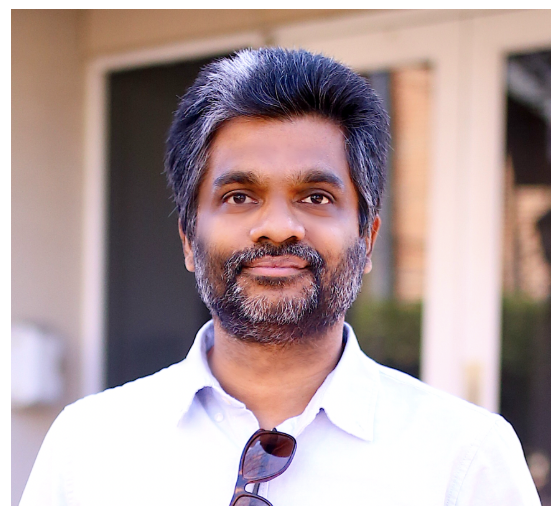
Mohit Bansal
University of North Carolina (UNC), Chapel Hill

Minhyuk Sung
KAIST

Jiao Sun
Google DeepMind

Le Song
GenBio AI, MBZUAI
05 Organizers

Souvik Kundu
Intel Labs

Digbalay Bose
Adobe Research

Sayan Nag
Adobe Research

Manling Li
Northwestern University
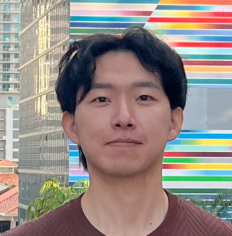
Jaehong Yoon
Nanyang Technological University

Lanqing Guo
University of Texas, Austin

Hongyi Wang
Rutgers University, GenBio AI

Sanjoy Chowdhury
University of Maryland, College Park
06 Sponsors
We are grateful to our sponsors for supporting this workshop.
Interested in sponsoring? Contact us